


Commercial Kitchen Floors
Impact Flooring is a specialist UK contractor installing heavy-duty, hygienic, and anti-slip resin flooring for commercial kitchens, restaurants, and food preparation areas.
Meeting UK Health Regulations for Commercial Kitchen Floors
Food preparation areas are subject to strict hygiene requirements, making flooring one of the most important parts of your kitchen. It must withstand heavy foot traffic, frequent cleaning, hot water, chemicals and constant impacts, while remaining safe, hygienic and easy to maintain. Our seamless resin flooring systems help commercial kitchens meet Food Standards Agency (FSA) regulations and support Hazard Analysis Critical Control Point (HACCP) principles (the gold standard for food safety). Unlike traditional tiled floors, resin flooring creates a seamless, impervious surface that is easy to clean and resistant to bacteria.

Which Commercial Kitchen Floor Types Comply with UK Health Regulations?
A compliant commercial kitchen floor should be:
- Completely seamless and non-porous
- Resistant to grease and cleaning agents
- Slip-resistant
- Easy to clean and disinfect
- Durable enough to withstand regular traffic and heavy equipment
- Resistant to thermal shock and frequent washdowns
Heavy-duty polyurethane resin screeds are widely recognised as the preferred solution for demanding foodservice environments. Epoxy systems can also provide an excellent option in lower-temperature areas where the risk of thermal shock is less likely.
The Hidden Dangers of Failed Quarry Tiles and Broken Grout
Traditional quarry tiles have been used in commercial kitchens for decades, but can become a liability as they age. Constant impacts from heavy pots, trolleys and other catering equipment can crack tiles, while porous grout lines can harbour dangerous pathogens such as listeria and E. coli. A seamless resin floor completely removes these weak points. With no grout joints, porous surfaces or cracked areas, contaminants remain on the surface where they can easily be removed during cleaning, helping you to maintain the highest hygiene standards.

Evaluating the Most Durable Flooring Options for a Busy Commercial Kitchen
The right flooring system depends on the demands on the kitchen in question. Changes in temperature, cleaning methods, chemical exposure, and operational traffic all influence which resin system offers the best long-term performance. As experienced commercial flooring contractors, we assess each kitchen individually before recommending the best solution.
Pros and Cons of Epoxy Floor Coatings for Food Service Environments
Epoxy flooring offers an attractive, hard-wearing finish with strong resistance to cleaning products and daily wear. It’s particularly suited to food preparation areas, dry stores, serving areas and commercial bars where temperatures stay relatively stable. Epoxy systems are less suited to areas exposed to repeated thermal shock above 60°C. Our experienced epoxy flooring specialists can advise if you’re not sure whether epoxy resin is right for your commercial kitchen.
Heavy-Duty Polyurethane Screeds for Intensive Catering Hubs
Polyurethane resin screeds provide exceptional durability under demanding conditions. They withstand temperatures of up to 120°C, making them ideal beneath cook lines, commercial ovens, dishwashers and washing stations. They also offer excellent impact resistance. As experienced resin flooring specialists, we regularly specify polyurethane systems for high-volume catering facilities requiring longevity and maximum hygiene performance.
| Flooring Criteria | High-Build Epoxy Coatings | Polyurethane Resin Screeds (6mm – 9mm) |
| Thermal Shock Resistance | Moderate (up to 60°C) | Superior (up to 120°C / direct steam) |
| Impact & Drop Resistance | Good | Exceptional (heavy pots, pans and kegs) |
| Installation Profile | Smooth or lightly textured | Aggressive slip-resistant profile |
| Best Suited For | Light catering, bar service, dry stores | High-volume kitchens, walk-in ovens, main wash-up bays |
Mitigating Risks: Slip Resistance and Integrated Drainage Infrastructure
Professional commercial restaurant flooring must actively reduce the risk of slips while supporting effective cleaning schedules.
Selecting the Best Commercial Kitchen Floor Coatings for Slip Resistance
Commercial kitchens are constantly exposed to hot oils, animal fats, boiling water and cleaning products, which can all create hazardous slip conditions. Simply choosing a textured floor is not enough, as the texture can wear away over time. Our resin systems have hard-wearing aggregates embedded into the wet resin matrix during installation, providing long-lasting slip resistance in the most demanding environments. The result is a floor that maintains high Pendulum Test Values (PTV >36), even in contaminated conditions.
What is a Pendulum Test Value (PTV)?
The Pendulum Test measures the slip-resistance of a floor by replicating the action of a pedestrian’s heel striking its surface. The UK Health and Safety Executive (HSE) classes a PTV of 36 or above as presenting a low slip potential, meaning only around 1 in 1 million people would be expected to find the surface slippery under the test conditions. Choosing a commercial kitchen floor that achieves this level of performance helps reduce slip risks and supports a safer working environment, as long as the flooring is correctly maintained and suited to its intended use.
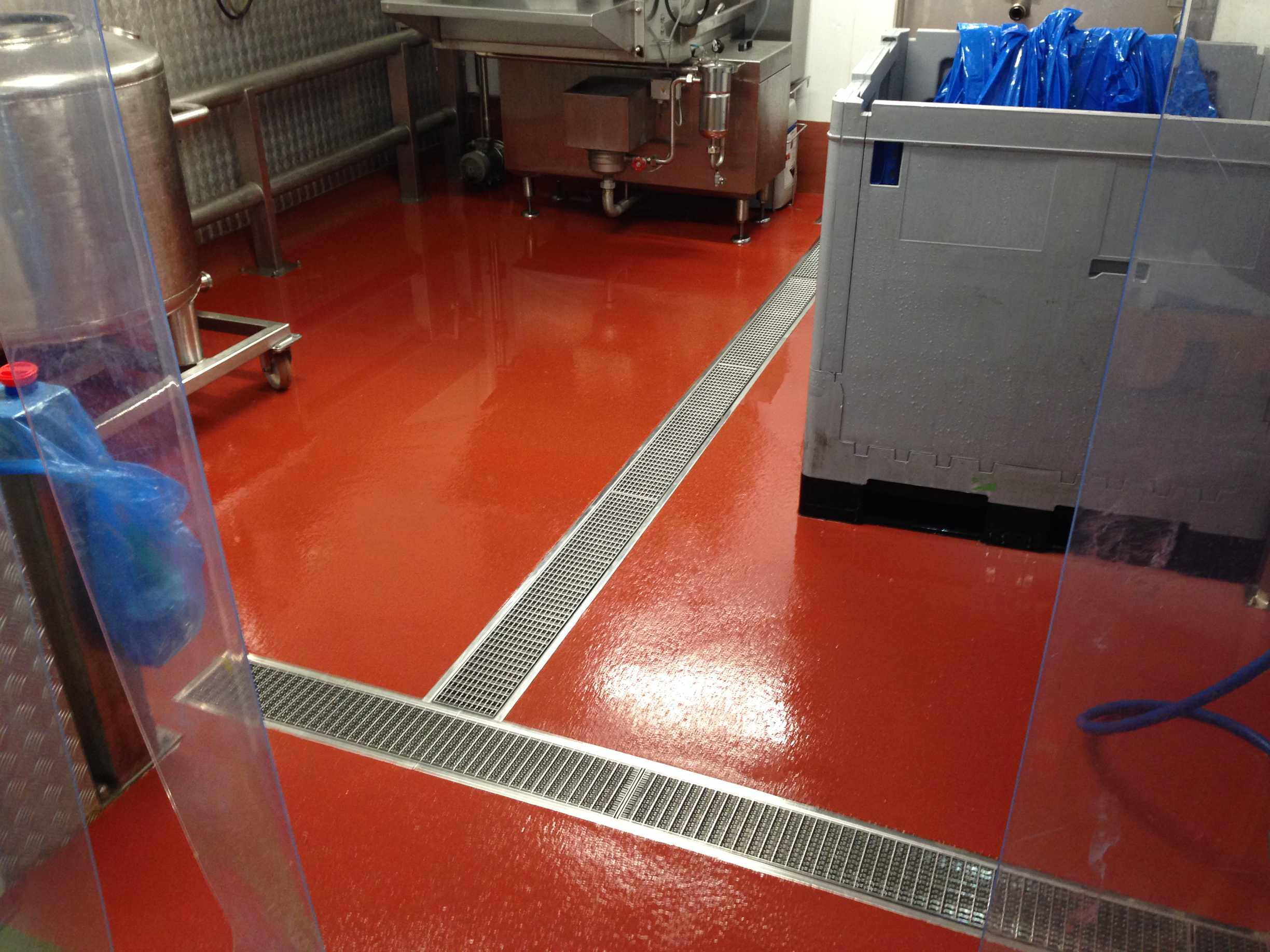
Essential Design Guide to Commercial Kitchen Floor Drainage Solutions
A compliant commercial kitchen floor should be:
- Completely seamless and non-porous
- Resistant to grease and cleaning agents
- Slip-resistant
- Easy to clean and disinfect
- Durable enough to withstand regular traffic and heavy equipment
- Resistant to thermal shock and frequent washdowns
Heavy-duty polyurethane resin screeds are widely recognised as the preferred solution for demanding foodservice environments. Epoxy systems can also provide an excellent option in lower-temperature areas where the risk of thermal shock is less likely.
Executing a Flawless Renovation: The Substrate and Contractor Choice
Careful planning, thorough preparation and experienced installation are all essential to achieving a reliable kitchen flooring solution.
How to Choose a Suitable Flooring Contractor for a Restaurant Kitchen Refurbishment
When choosing a contractor, look for proven experience within food manufacturing and catering environments, as well as fully in-house installation teams and a clear understanding of food hygiene regulations. At Impact Flooring, we have a wealth of experience in designing and installing hospitality and restaurant flooring and large-scale food processing flooring, enabling us to specify systems tailored to your needs with minimal disruption during installation.
Analysing Substrate Preparation Requirements and Project Cost Factors
Every project starts with a comprehensive site survey to assess moisture levels in the concrete slab, identify grease contamination, inspect existing floor defects and determine the most appropriate preparation method, generally using dust-free diamond grinding or shot-blasting.
Project costs depend on certain factors, such as:
- The existing substrate condition
- The level of preparation needed
- Resin thickness
- Specification of coving, drainage integration and floor falls.
Because every kitchen is different, we provide bespoke quotations for every project.
Frequently Asked Questions About Commercial Kitchen Flooring
What flooring do you need in a commercial kitchen to ensure compliance?
Commercial kitchens require a seamless, non-porous, slip-resistant surface that is impermeable to liquids and easy to clean. Polyurethane resin screeds are widely recognised as suiting all UK food safety legislation requirements.
What are commercial kitchen floors made of in modern professional facilities?
While older kitchens used vinyl or ceramic tiles, modern commercial kitchens use heavy-duty polymer resin systems – primarily polyurethane or epoxy screeds – laid over a mechanically-prepared concrete floor.
Are floor drains required in commercial kitchens by law?
Regulations do not specifically state that floor drains are required. However, they do state that floors must prevent standing water and allow effective removal of waste liquids. For this reason, integrated drainage channels are considered essential to comply with hygiene standards.
Why are restaurant kitchen floors slippery and how can this be permanently resolved?
Cooking oils, grease, fats, cleaning products and water spills create a slippery surface over time. An industrial-grade resin floor with a textured, aggregated anti-slip profile provides an effective long-term solution.
Secure Your Hygiene Compliance with an Expert Kitchen Floor Survey
Upgrade your facility with heavy-duty restaurant kitchen flooring systems engineered to meet strict UK hygiene regulations, survive thermal shock and deliver long-term slip resistance.
Your kitchen floor plays a critical part in maintaining hygiene standards, protecting employees and keeping your kitchen running without interruption. Investing in professionally installed commercial restaurant flooring helps reduce maintenance costs, minimise downtime and support compliance with food safety regulations.
If you’re planning a refurbishment or replacing ageing restaurant kitchen flooring, contact Impact Flooring for honest technical advice, a transparent quotation and a flooring solution tailored to your needs.
Contact Us
If you would like to find out more about the best flooring for commercial kitchens, or if you would like a no-obligation consultation and quote, don’t hesitate to contact us. We look forward to hearing from you soon!
REQUEST A CALLBACK
Contact Us
"*" indicates required fields
For bespoke industry flooring solutions talk to Impact Flooring today.
We offer free no obligation advice and can provide a price range on the first call.


 Impact House, 4 Short Street, Nuneaton, Warwickshire, CV10 8JF