
Non-Slip Resin Flooring
Protect your workforce and secure strict Health, Safety, and Environment (HSE) compliance with a durable anti-slip floor coating engineered to withstand relentless mechanical traffic, aggressive cleaning and chemical exposure.
Complying with HSE Standards: Specifying Slip-Resistant Resin Flooring
Understanding how floor performance is measured helps ensure your chosen system provides the appropriate level of safety for the conditions it will face.
Understanding Pendulum Test Values (PTV) in Wet and Oily Environments
Industrial floor safety cannot be judged by appearance alone. Under Regulation 12 of the Workplace (Health, Safety and Welfare) Regulations 1992, floor surfaces must be suitable, maintained and resistant to slip hazards. The UK Health and Safety Executive (HSE) assesses floor safety using Pendulum Test Values (PTV), which measure slip resistance under realistic operating conditions:
- PTV below 24: High slip potential
- PTV 25-35: Moderate slip potential
- PTV 36+: Low slip potential

A floor that performs safely when dry can become hazardous once exposed to water, oil, chemical lubricants or food residues. Effective specification requires choosing a floor coating based on the worst contamination conditions expected during day-to-day operations.
The Cost of Slips, Trips and Non-Compliance Liabilities
Slip-related incidents carry both direct and indirect commercial consequences. Lost productivity, staff absence, insurance claims and HSE scrutiny can all create both financial and operational pressures. According to the HSE, the cost to employers is more than £500m per year. Correctly specified slip-resistant resin flooring reduces accident risk while protecting your facility against premature floor degradation and compliance failures.
Guaranteed Anti-Slip Properties
As resin flooring specialists, we guarantee that our anti-slip flooring solutions meet rigorous Health and Safety Executive (HSE) standards to prevent slips and trips in the workplace.
Specifying the Correct Anti-Slip Resin Flooring System for Your Sector
Selecting the right resin system should be based on the contaminants present, the cleaning regime in place and the level of pedestrian or vehicle traffic the floor will face.
Balancing Aggressive Surface Traction with Cleanability Requirements
Industrial slip resistance is created through controlled surface texture. During installation, kiln-dried quartz, aluminium oxide or specialist aggregate blends are scattered onto the wet resin before a final seal coat is applied. This secures the aggregates in place while creating a textured surface that provides long-lasting slip resistance. The challenge is in finding the right balance: more aggressive textures improve grip, but their deeper surface profile can trap more dirt and contaminants, making the floor more demanding to clean effectively.

Impact Flooring works with clients to identify the correct threshold between traction and hygiene, ensuring surfaces remain safe without trapping contaminants or reducing cleaning efficiency.
Graded Aggregate Broadcasts vs. Integral Texture Profiles
Broadcast systems create slip resistance by embedding exposed aggregates into the wet resin, producing a durable, textured surface for high-risk environments. Integral texture systems generate grip through the resin surface itself, creating a more uniform finish that is easier to clean. The correct solution depends on contamination type, cleaning frequency and traffic intensity.
| Surface Condition | Target PTV Rating | Profile Description | Best Suited For |
| Dry / Low Contamination | 36+ (Low Risk) | Fine textured profile / light seal | Electronic assembly, packing lines, dry goods warehousing |
| Wet / Frequent Washdowns | 45+ (Ultra-Safe) | Medium quartz aggregate broadcast | Commercial kitchens, food and beverage processing, loading bays |
| Oily / Greasy Spills | 70+ (Maximum Grip) | Coarse, heavy aggregate profile | Automotive workshops, heavy engineering, chemical plants, external ramps |
For specialist applications, explore our resin flooring and epoxy flooring systems.
Seamless Protection: Non-Slip Industrial Flooring Installation
Careful attention to detail at every stage of the installation process ensures the finished floor delivers reliable performance, long-term durability and workplace safety.
Substrate Preparation and Eliminating Coating Delamination
Long-term industrial flooring performance depends on proper preparation. Many off-the-shelf single-pack floor paints fail because they sit on the surface rather than forming a structural bond. Under forklift turning forces and cleaning cycles, coatings begin to peel and delaminate. Impact Flooring uses dust-controlled shot-blasting and diamond grinding to expose the concrete pores before priming. This creates the profile needed for the resin to bond securely with the substrate, ensuring maximum adhesion and long-term durability.
We complete comprehensive moisture testing, crack repairs and substrate correction before installation to prevent hidden failures after handover.
Integrating Safety Markings, Demarcation and Anti-Slip Stairs
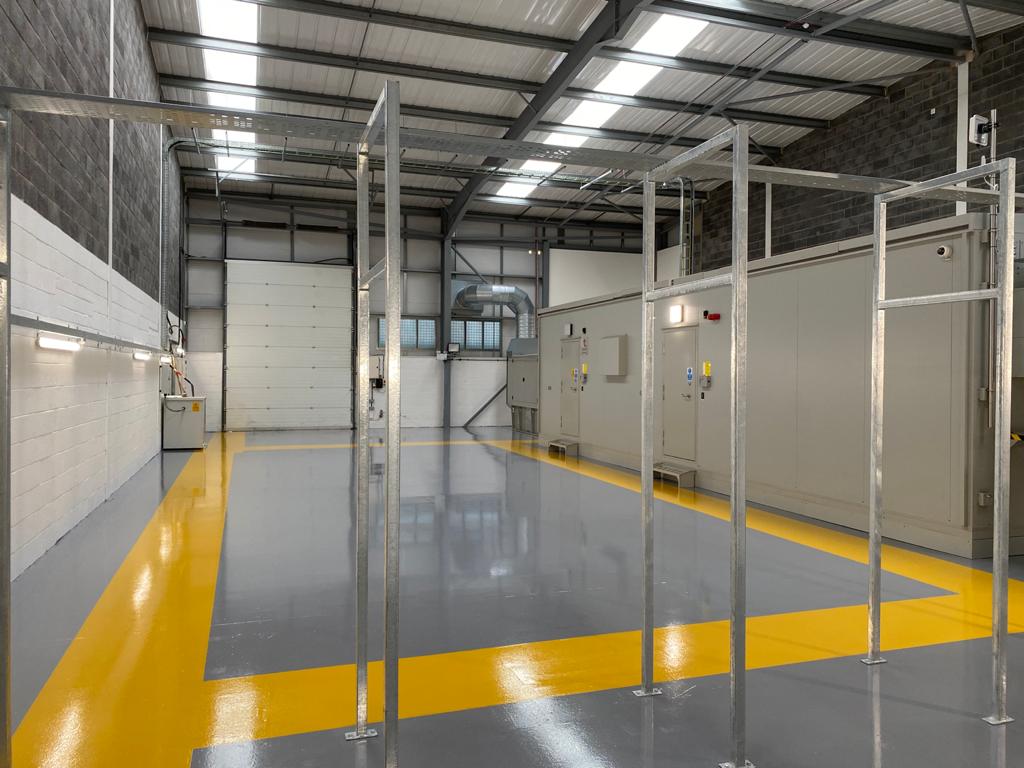
Safety performance extends beyond the main floor area. Our installation team integrates pedestrian routes, coloured demarcation systems, forklift segregation zones, stainless steel drainage, and specialist anti-slip stairs into a complete workplace safety specification. This integrated approach is particularly valuable across food production, automotive manufacturing, chemical processing and other regulated environments.
Frequently Asked Questions on Slip-Resistant Industrial Floors
What is the difference between European R-ratings and UK Pendulum Test Values (PTV)?
R-ratings and PTV measure slip resistance differently. The UK HSE strictly favours Pendulum Testing because it can be carried out directly on installed flooring under real operating conditions. R-ratings (R9-R13) originate from German ramp testing using shod operators and oil. Pendulum Testing provides site-specific verification that reflects actual workplace exposure.
How do you clean a textured, slip-resistant floor without destroying the mop?
Heavily textured floors should not be cleaned using traditional string mops as they become torn and trap dirty water. Mechanical scrubber-dryers or rotary cleaning systems deliver more effective cleaning and preserve performance. Appropriate nylon brush heads and industrial degreasers lift contamination from the textured surfaces without damaging the resin finish.
Can anti-slip properties be added to existing smooth epoxy coatings?
Yes. ProfesYes. Existing coatings can often be upgraded without full removal. The surface must first be mechanically abraded and thoroughly degreased before applying a fresh high-build resin layer containing anti-slip aggregates and a protective topcoat.
Request a Technical Site Survey and Anti-Slip Quotation
Workplace slips rarely happen because of a single event. More commonly, they develop through a combination of worn coatings, poor preparation, contaminants and unsuitable specifications. Impact Flooring provides detailed on-site assessments to evaluate substrate condition, traffic intensity, cleaning regimes and contamination risks before recommending a tailored solution.
If your facility cannot afford operational disruption, compliance concerns or repeated floor failures, arrange a technical site survey today. Our specialists will deliver a fully specified non-slip resin flooring system designed for long-term safety, legal compliance and dependable operational performance.
Slip Resistance Doesn’t Mean Fewer Colour Options
Adding slip resistance means broadcasting an aggregate into the resin, which can slightly change how a colour reads compared with a smooth finish in the same shade. We’ll show you a cured sample of your chosen colour with the anti-slip texture applied, not just a smooth swatch, so you know what you’re actually getting. Our standard range and any RAL or BS colour are both available on anti-slip systems.

Graphite

Slate

Steel

Platinum

Lincoln

Carmine

Coleman

Bondi

SERVICES
SOLUTIONS
SECTORS
REQUEST A CALLBACK
Contact Us
"*" indicates required fields
For bespoke industry flooring solutions talk to Impact Flooring today.
We offer free no obligation advice and can provide a price range on the first call.


 Impact House, 4 Short Street, Nuneaton, Warwickshire, CV10 8JF
Not ready to talk yet?