

The UK’s leading resin flooring specialist
What Finish Can You Expect from a Polished Concrete Floor? Gloss, Matte & More
When you think of polished concrete, a basic grey slab might come to mind, but polished concrete floor finishes give you a range of aesthetic and functional options across industrial, commercial, and retail environments. From soft matte surfaces to mirror-like gloss, polished concrete floor finishes can completely change the look and performance of a space.
Thanks to its durability, low maintenance, and chic appearance, polished concrete is a great choice for modern spaces. So, what options are available, and how do you decide which is right for your project?
Understanding Polished Concrete Floor Finishes
When you’re evaluating flooring options for your facility, polished concrete offers something quite different from what you might expect. It transforms ordinary concrete into a high-performance surface, and you have genuine control over the final result because you can specify exactly what finish you want. For example, you might want a high-gloss floor for a customer-facing area.
What is a polished concrete floor?
A polished concrete floor is what happens when you take an ordinary concrete slab and transform it through a mechanical grinding and polishing process. We start with coarse diamond grinding tools and work our way up through progressively finer grits until we achieve the desired finish. This process removes the top layer of concrete to reveal the aggregate (the stones and sand mixed into the concrete) underneath while creating an increasingly smooth and reflective surface.
The concrete is treated with chemical densifiers (which fill the pores and weak spots in the concrete), and as the process continues, the concrete becomes denser, improving its resistance to wear. The final look depends on how far the surface is refined and which sealing and densifying products are used to achieve different levels of shine and texture.
Why finish matters
Different finishes can affect slip resistance, cleaning requirements, and how the floor fits into your overall design scheme. For example, a matte finish can hide minor imperfections better, whereas a gloss finish tends to accentuate dust and scuff marks more noticeably. The finish also impacts your maintenance requirements – glossier surfaces typically need more frequent cleaning to maintain their appearance, whilst matte finishes are more forgiving.
The Types of Polished Concrete Floor Finishes
Polished concrete finish types are classified by two key characteristics: sheen level and aggregate exposure.
Sheen level: matte, satin & gloss
Matte finishes have a soft, understated look with minimal light reflection. It’s ideal for industrial facilities where safety and practicality take priority over aesthetics. A matte finish also provides excellent slip resistance.
Satin finishes strike a balance between functionality and visual appeal, with a subtle sheen that suits offices, retail spaces, restaurants, and showrooms. They provide moderate light reflection while maintaining good slip resistance properties.
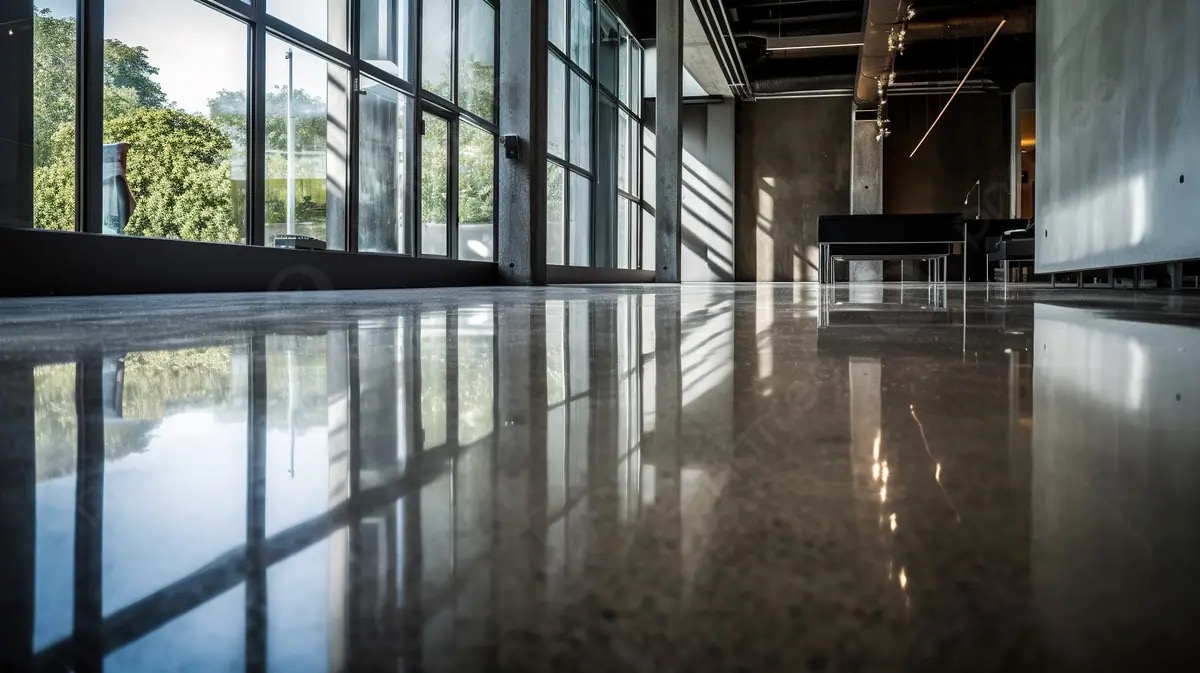
High-gloss finishes have a bright, mirror-like shine. Gloss finishes can be very striking, so they’re often seen in high-end commercial spaces, luxury car showrooms, or lobbies – spaces where visual impact matters. A high-gloss finish reflects more light, making large spaces brighter and more energy-efficient (by reducing lighting costs). Glossy polished concrete floor finishes require more careful maintenance, though, because the surface shows scratches and marks in high-traffic areas.
The sheen level is determined by how finely the surface is polished. Fewer passes with coarse abrasives produce a matte surface, while multiple stages of refinement with finer abrasives create a deep gloss.
Aggregate exposure levels
Another major design choice is how much of the concrete’s aggregate you want to expose during the polishing process. Grinding deeper into the concrete reveals more of the stone and sand within the mix, which alters both the appearance and texture. Options include:
- Cream finish, which removes only the surface laitance, leaving the surface paste largely intact, creates a smooth, uniform look with no visible aggregate.
- Salt and pepper finish involves light grinding, exposing fine sands and small stones for a subtle, speckled effect.
- Full aggregate exposure involves heavy grinding to reveal larger stones for a decorative, terrazzo-style effect. It’s visually striking, but creates a lot of texture underfoot, which may not suit certain spaces.
How Polishing Technique Affects Finish
Each step in the process contributes to the surface properties…
Grinding & honing process explained
The finish of a polished concrete floor is directly tied to how the surface is prepared. Coarse diamond grinding removes surface imperfections and exposes the aggregate for further refinement, while honing gradually smooths the surface to your chosen sheen level. Successive honing steps smooth the surface, while finer passes increase reflectivity. The technician’s skill and the chosen grit levels both influence the outcome.
Concrete densifiers & protective sealers
The densifiers soak into the concrete’s porous surface, where they react chemically to harden the material from within. This makes your floor much more resistant to the kind of daily punishment it’ll face – impact damage, surface wear, and general deterioration. The sealers then go on top to give you that final layer of protection, controlling how much gloss you get whilst keeping moisture, spills, and stains from penetrating the surface. When you combine these treatments, your floor maintains its appearance and performance for years.
How to Decide on the Best Polished Concrete Floor Finish
Industrial spaces
In warehouses, manufacturing plants, distribution centres, and logistics facilities, a matte or satin finish with medium aggregate exposure is often the best choice. These finishes minimise glare, hide dust, improve slip resistance, and withstand heavy machinery and foot traffic. A lower-sheen finish also has lower maintenance requirements.
Commercial & showroom spaces
For offices, retail showrooms, and shopping centres, high-gloss polished concrete is a popular option. The increased light reflectivity of high-gloss polished concrete floor finishes can reduce lighting costs by brightening interiors. It creates a clean and modern look that definitely leaves a lasting impression on visitors.
The Best Polished Concrete Finish for Your Project?
When you work with experienced specialists, you get the kind of guidance that prevents costly mistakes and ensures your floor performs exactly as you need it to. A properly specified and installed polished concrete floor will serve your facility reliably for years. At Impact Flooring, we help businesses across industrial, commercial, and retail sectors achieve polished concrete finishes tailored to your needs.
If you’re planning a new flooring project, get in touch with our team to explore the best options for your space.